 
|
|


Feature Article
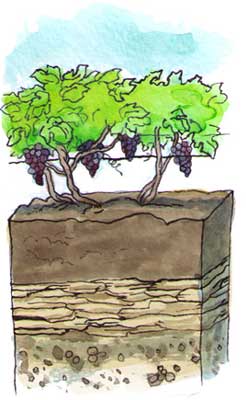
Lockwood has about 23 inches of developed topsoil on the surface, and below lies a layer of cobbles and shale which are the leftovers of an ocean bottom deposit.
Lockwood Vineyard – Wine on the Rocks
The Lockwood shaly loam makes growing in this climate really exciting. There are about 23 inches of developed topsoil on the surface, and below lies a layer of cobbles and shale which are the leftovers of an ocean bottom deposit.
~Larry Gomez, Winemaker, Lockwood Vineyard
by
Laurie Daniel
January 11, 2007
Laurie Daniel (LD): Your estate vineyard is wholly within the San Lucas AVA, but your wines are labeled “Monterey” rather than San Lucas. Why?
Larry Gomez (LG): When the vineyard was planted in 1981, and the first wine was released from the 1989 vintage, the focus on appellation distinction was not as great. Monterey was the appellation that covered the county, and the partners felt this was the best for our new brand recognition. Monterey has been recognized as a national as well as international destination, along with the prestige of its historic fame. This made the choice easy.
LD: I saw a bottle recently from another winery that said “Monterey, San Lucas” on the back label. Any plans to do something like that?
LG: I think the emphasis will be on Monterey. I am sure marketing will want to take advantage of the recognition value.
LD: You produce a range of varietal wines, from Chardonnay to Cabernet Sauvignon, from your vineyard. Which grape variety does best in the San Lucas AVA?
LG: Chardonnay is my favorite. The year-to-year climate nuances really bring an assortment of flavors to our Chardonnay. In cooler years, we get a flinty stone-fruit style, and in the warmer seasons, we get the beautiful tropical aromas and textures. Pinot Noir will also show its strength as a varietal here in San Lucas. Our Block 7 Pinot Noir has been a very strong performer and has made delicious wines.
LD: Much is made of the unusual soil type, Lockwood shaly loam, that’s found in your estate vineyard. Could you tell me a little more about it?
LG: The Lockwood shaly loam makes growing in this climate really exciting. There are about 23 inches of developed topsoil on the surface, and below lies a layer of cobbles and shale which are the leftovers of an ocean bottom deposit. If you were to use a golden rule in grape growing, it would be to control the vigor of your vine. Control allows the management of canopy and fruit load and the eventual wine quality. Lockwood shaly loam has minimal organic matter, which makes the roots hunt for the nutrients they need. The soil has good moisture retention due to the calcium in the shale, yet good drainage due to the cobbles and rocks. This allows the increased control of vigor by irrigation management.
LD: Does that soil type extend to other areas in the San Lucas AVA? What does it bring to your wines?
LG: This soil type covers about 60 to 70 percent of the AVA. The good drainage really moves the seasonal rains through the root zone, helping to decrease the amount of excess water available during early spring growth. This acts to control the size of the canopy that the vine creates, which in turn controls shading of the fruit and the crop loads. This translates to more balanced fruit maturity across the vine at harvest, riper flavors, and more intense varietal character in the finished wine.
LD: What other factors besides soil type set San Lucas apart from the broader Monterey AVA?
LG: What sets this vineyard apart from the rest of the county is the temperature. This southernmost part is the warmest in the county. Ten miles north of here, the temperatures can be as much as 8 to 10 degrees cooler for a daytime high. Each vineyard, as we travel north, will express its varietal character a little differently. Chardonnay flavors become a bit more apple-spicy as you go north, departing from the more tropical character which our vineyard expresses. Our red varieties show rounder tannins and fresher, riper flavors than our neighbors to the north. Winemakers to the north put their jackets on earlier in the day than those of us in San Lucas.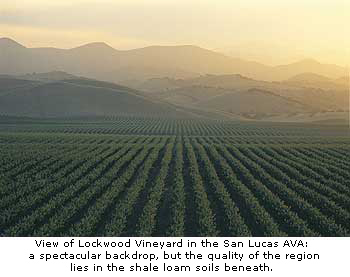
LD: That takes me back to your comments about Chardonnay and Pinot Noir doing so well in San Lucas. I would have thought that San Lucas is too far south and thus too warm for those grape varieties to do as well as they do in, say, the Santa Lucia Highlands. Is that a misconception?
LG: One little detail which might shed some perspective. To begin with, Monterey County has one of the earliest bud breaks in the entire state, and we harvest last in the state. So when we talk about warm, it is in reference to the rest of Monterey County. In the last two years, we have harvested Chardonnay in late October. That wouldn’t be characteristic of a really warm region. Harvest to the north continued into November. This is all due to the frigid water temperature of Monterey Bay. The closer you are to its weather-making effect, the cooler the conditions in your vineyard – to the point of being too cold in the north county.
The Santa Lucia Highlands have a cooler climate, and the vines are grown at more elevation. That also means less soil fertility and a bit warmer air as you rise above the valley floor. With Pinot Noir being a relatively early-ripening variety, those lighter soils will warm up faster than the soils below and keep vine metabolism on schedule. The heat units which they experience are less than San Lucas but plenty to ripen a crop. They ripen a good deal later due to the fog which lingers later into the day.
LD: So, to put it a little differently, San Lucas is warmer than the AVAs to the north in Monterey, but the climate of your part of the county is still moderate enough to produce good Chardonnay and Pinot Noir?
LG: Yes, it is. I think in a nutshell that Chard and Pinot expressions will be different from here to the north. Ours show richer characteristics in both varietals.
LD: What about ripening some of the other red varieties, like Cabernet Sauvignon and Syrah?
LG: Syrah is also a mid-season ripener, usually just after Pinot and right before Merlot. Syrah and Merlot are varieties that sugar up promptly, and then you can wait for a little more maturity if you want. With these, we can achieve Brix of 25-plus if desired, with plenty of good weather left to hang them a bit. Cabernet Sauvignon is always late, and everyone is watching the weatherman until it is done. Early storms can put the Cabernet Sauvignon harvest in a rough place. We keep our crop loads moderate so that the vine can ripen them in time. Big crops are always in danger of not enough season to ripen them. This year, we finished on the 10th of November. That is kind of dicey. We end up with bright Cabernet fruit, the wines very extractable, and the tannins soften with the long growing season.
Larry Gomez (LG): When the vineyard was planted in 1981, and the first wine was released from the 1989 vintage, the focus on appellation distinction was not as great. Monterey was the appellation that covered the county, and the partners felt this was the best for our new brand recognition. Monterey has been recognized as a national as well as international destination, along with the prestige of its historic fame. This made the choice easy.
LD: I saw a bottle recently from another winery that said “Monterey, San Lucas” on the back label. Any plans to do something like that?
LG: I think the emphasis will be on Monterey. I am sure marketing will want to take advantage of the recognition value.
LD: You produce a range of varietal wines, from Chardonnay to Cabernet Sauvignon, from your vineyard. Which grape variety does best in the San Lucas AVA?
LG: Chardonnay is my favorite. The year-to-year climate nuances really bring an assortment of flavors to our Chardonnay. In cooler years, we get a flinty stone-fruit style, and in the warmer seasons, we get the beautiful tropical aromas and textures. Pinot Noir will also show its strength as a varietal here in San Lucas. Our Block 7 Pinot Noir has been a very strong performer and has made delicious wines.
LD: Much is made of the unusual soil type, Lockwood shaly loam, that’s found in your estate vineyard. Could you tell me a little more about it?
LG: The Lockwood shaly loam makes growing in this climate really exciting. There are about 23 inches of developed topsoil on the surface, and below lies a layer of cobbles and shale which are the leftovers of an ocean bottom deposit. If you were to use a golden rule in grape growing, it would be to control the vigor of your vine. Control allows the management of canopy and fruit load and the eventual wine quality. Lockwood shaly loam has minimal organic matter, which makes the roots hunt for the nutrients they need. The soil has good moisture retention due to the calcium in the shale, yet good drainage due to the cobbles and rocks. This allows the increased control of vigor by irrigation management.
LD: Does that soil type extend to other areas in the San Lucas AVA? What does it bring to your wines?
LG: This soil type covers about 60 to 70 percent of the AVA. The good drainage really moves the seasonal rains through the root zone, helping to decrease the amount of excess water available during early spring growth. This acts to control the size of the canopy that the vine creates, which in turn controls shading of the fruit and the crop loads. This translates to more balanced fruit maturity across the vine at harvest, riper flavors, and more intense varietal character in the finished wine.
LD: What other factors besides soil type set San Lucas apart from the broader Monterey AVA?
LG: What sets this vineyard apart from the rest of the county is the temperature. This southernmost part is the warmest in the county. Ten miles north of here, the temperatures can be as much as 8 to 10 degrees cooler for a daytime high. Each vineyard, as we travel north, will express its varietal character a little differently. Chardonnay flavors become a bit more apple-spicy as you go north, departing from the more tropical character which our vineyard expresses. Our red varieties show rounder tannins and fresher, riper flavors than our neighbors to the north. Winemakers to the north put their jackets on earlier in the day than those of us in San Lucas.
LD: That takes me back to your comments about Chardonnay and Pinot Noir doing so well in San Lucas. I would have thought that San Lucas is too far south and thus too warm for those grape varieties to do as well as they do in, say, the Santa Lucia Highlands. Is that a misconception?
LG: One little detail which might shed some perspective. To begin with, Monterey County has one of the earliest bud breaks in the entire state, and we harvest last in the state. So when we talk about warm, it is in reference to the rest of Monterey County. In the last two years, we have harvested Chardonnay in late October. That wouldn’t be characteristic of a really warm region. Harvest to the north continued into November. This is all due to the frigid water temperature of Monterey Bay. The closer you are to its weather-making effect, the cooler the conditions in your vineyard – to the point of being too cold in the north county.
The Santa Lucia Highlands have a cooler climate, and the vines are grown at more elevation. That also means less soil fertility and a bit warmer air as you rise above the valley floor. With Pinot Noir being a relatively early-ripening variety, those lighter soils will warm up faster than the soils below and keep vine metabolism on schedule. The heat units which they experience are less than San Lucas but plenty to ripen a crop. They ripen a good deal later due to the fog which lingers later into the day.
LD: So, to put it a little differently, San Lucas is warmer than the AVAs to the north in Monterey, but the climate of your part of the county is still moderate enough to produce good Chardonnay and Pinot Noir?
LG: Yes, it is. I think in a nutshell that Chard and Pinot expressions will be different from here to the north. Ours show richer characteristics in both varietals.
LD: What about ripening some of the other red varieties, like Cabernet Sauvignon and Syrah?
LG: Syrah is also a mid-season ripener, usually just after Pinot and right before Merlot. Syrah and Merlot are varieties that sugar up promptly, and then you can wait for a little more maturity if you want. With these, we can achieve Brix of 25-plus if desired, with plenty of good weather left to hang them a bit. Cabernet Sauvignon is always late, and everyone is watching the weatherman until it is done. Early storms can put the Cabernet Sauvignon harvest in a rough place. We keep our crop loads moderate so that the vine can ripen them in time. Big crops are always in danger of not enough season to ripen them. This year, we finished on the 10th of November. That is kind of dicey. We end up with bright Cabernet fruit, the wines very extractable, and the tannins soften with the long growing season.
Print this article | Email this article | More about San Lucas | More from Laurie Daniel